Continuing Bonds
Grief is often described as a process of letting go — of finding closure, saying goodbye, and eventually moving on. It is an idea so embedded in how we talk about bereavement that many people feel they are grieving wrongly if they cannot do it.
Modern bereavement theory tells a different story.
What are continuing bonds?
The concept of continuing bonds was introduced by researchers Klass, Silverman, and Nickman in the 1990s, and it has quietly transformed how bereavement counsellors think about grief. The central idea is simple but profound: healthy grieving does not require you to sever your emotional connection with the person who has died. It requires you to transform it.
The bond does not end at death. It changes.
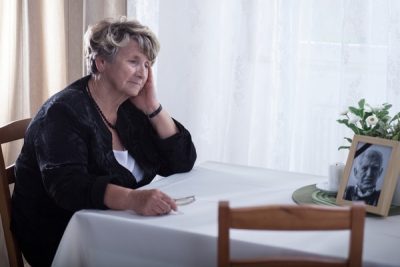
Continuing bonds can take many forms. Some people talk to their loved one — aloud, or silently — in private moments. Others visit the grave regularly, not because they are stuck in grief, but because it brings them comfort. Some keep the memory alive through rituals, through storytelling, through cooking the recipes they loved, through living according to the values they held dear.
None of this is a sign of being unable to move on. Research consistently shows that for many bereaved people, continuing bonds are a natural and healthy part of the grieving process. A way of integrating the loss into life rather than erasing it.
The problem with “closure”
The idea of closure — that grief should end in a clean emotional full stop — has never matched the reality of how people actually grieve. Most bereaved people do not want to stop loving the person they have lost. They want to find a way to carry that love forward into a life that has been changed by the loss.
Continuing bonds gives us a language for that. It says: you are not failing at grief by still loving someone who has died. You are doing what love does.
How this shapes my work
In my practice, I see continuing bonds at work in almost every client I work with. A widow who still sets two cups out of habit and finds, over time, that she does it not from confusion but from comfort. A father who talks to his son on the morning of his birthday, every year. A woman who makes her mother’s Christmas cake because it keeps her present in the room.
These are not symptoms of complicated grief. They are expressions of an enduring relationship — one that has changed its form but not its depth.
If you feel that you are not ready to let go, you may not need to. What we work on together is finding a way to hold the connection that feels right for you — and to build a life that has room for both the loss and the living.
Grief models I work with → stages-of-grief→
If you would like to talk, I’m here Contact Sally →